Chinese Households Cut Loans by 1.03 Trillion Yuan as Companies and Institutions Add 11.26 Trillion
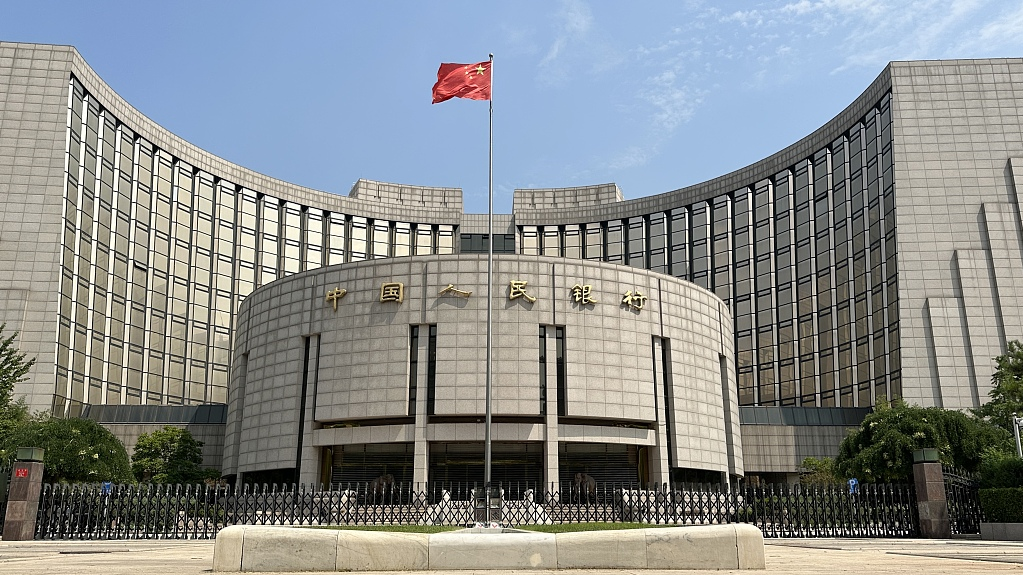
Chinese households reduced their outstanding yuan borrowing by 1.03 trillion yuan over the first 8 months of 2026 while companies and institutions added 11.26 trillion, against a total increase in yuan loans of 10.44 trillion. That increase alone equals 107.9 percent of the headline rise, on our calculation, though the borrower classes the release names do not sum exactly to the total, since the central bank does not itemise every class. The People’s Bank of China published the August figures on Monday. Broad money grew 7.5 percent from a year earlier to 356.81 trillion yuan and aggregate financing to the real economy 7.2 percent to 464.8 trillion. Both are preliminary, as the Bank states at the foot of its release.
Households are repaying and saving at the same time
The household numbers are the ones that carry the release. Short term household lending fell by 1.05 trillion yuan across the 8 months, and medium and long term household lending, the category that contains mortgages, rose by 18.8 billion. That is 0.18 percent of the total loan increase for the period, on our calculation.
| Yuan loans, first 8 months of 2026 | Change |
|---|---|
| Households | -¥1.03tn |
| of which short term | -¥1.05tn |
| of which medium and long term | +¥18.8bn |
| Companies and institutions | +¥11.26tn |
| of which short term | +¥4.18tn |
| of which medium and long term | +¥5.64tn |
| of which bill financing | +¥1.29tn |
| Non bank financial institutions | -¥438bn |
| Total yuan loans | +¥10.44tn |
As published by the People’s Bank of China for the first 8 months of 2026. Values in yuan. The named borrower classes do not sum exactly to the published total, which is carried as issued.
Set against that, household deposits rose 6.99 trillion yuan over the same 8 months. Counting the published deposit increase and loan reduction together, the household position moved about 8.02 trillion yuan toward deposits and away from debt across the period, on our calculation of the 2 balance sheet changes rather than of any single flow. Total yuan deposits rose 18.99 trillion against the 10.44 trillion of loans, a gap of 8.55 trillion, also our calculation. Deposits at non bank financial institutions rose 6.32 trillion yuan, almost as much as households, while lending to the same institutions fell 438 billion.
Government bonds gain share while loans lose it
The composition of aggregate financing has shifted in a single direction for a year. Government bonds outstanding reached 103.69 trillion yuan at the end of August, up 13.5 percent on the year and the fastest growth of any component the Bank names. They now make up 22.3 percent of the stock, up 1.2 percentage points from a year earlier. Yuan loans to the real economy make up 59.9 percent, down 1.3 points.
| Aggregate financing stock, end August 2026 | Level | Annual growth | Share change |
|---|---|---|---|
| Yuan loans to the real economy | ¥278.63tn | +5.0% | -1.3 pts |
| Government bonds | ¥103.69tn | +13.5% | +1.2 pts |
| Corporate bonds | ¥36.71tn | +9.7% | +0.2 pts |
| Non financial domestic equity | ¥12.67tn | +5.7% | -0.1 pts |
| Entrusted loans | ¥11.26tn | +1.0% | -0.2 pts |
| Trust loans | ¥4.58tn | +1.9% | unchanged |
| Undiscounted bankers’ acceptances | ¥2.01tn | -5.1% | -0.1 pts |
| Total | ¥464.8tn | +7.2% |
As published. The share column is the change in each component’s share of the total against a year earlier, as the Bank publishes it. Foreign currency loans, at 1.23 trillion yuan equivalent and 0.3 percent of the stock, are not carried here.
The government bond share gaining 1.2 points while the loan share loses 1.3 is, on our reading, the clearest single statement in the release about where credit demand now originates, though the 2 shifts describe a change in the composition of financing rather than proof of a one for one substitution.
Aggregate financing is 2.64 trillion yuan behind last year
New aggregate financing over the 8 months came to 23.91 trillion yuan, 2.64 trillion less than in the same period of 2025. Government bond net financing of 8.77 trillion supplied 36.7 percent of that total and yuan loans 42.8 percent, on our calculation.
| New aggregate financing, first 8 months | Amount | Against a year earlier |
|---|---|---|
| Yuan loans to the real economy | ¥10.23tn | -¥2.71tn |
| Government bond net financing | ¥8.77tn | -¥1.5tn |
| Corporate bond net financing | ¥2.79tn | +¥1.23tn |
| Non financial domestic equity financing | ¥470bn | +¥203.1bn |
| Foreign currency loans, yuan equivalent | ¥210.3bn | +¥291.9bn |
| Total | ¥23.91tn | -¥2.64tn |
As published. The Bank does not itemise every component of aggregate financing, and the named lines do not sum to the published total; the total is carried here as issued. Entrusted loans, trust loans and undiscounted acceptances all fell over the period and are not shown.
2 of the 3 largest lines are behind last year and one is well ahead. Corporate bond net financing at 2.79 trillion yuan is 1.23 trillion above the same period of 2025, the only line more than 1 trillion yuan ahead of last year.
Money is cheap and the interbank market is quieter
Neither of the 2 benchmark interbank rates moved much. The weighted average interbank offered rate was 1.38 percent in August, 2 basis points below July and 2 below a year earlier. The weighted average pledged repo rate was 1.4 percent, 2 basis points below July and 1 below a year earlier. Activity is a different matter. Turnover across interbank lending, cash bonds and repo came to 177.41 trillion yuan in August, with the daily average, at 8.45 trillion, down 12.5 percent on a year earlier. Within that, daily average interbank lending fell 24.6 percent and pledged repo 15.1 percent, while cash bond turnover rose 2.3 percent. The money aggregates carry their own split: currency in circulation grew 11.2 percent to 14.83 trillion yuan, the fastest of the 3, while narrow money grew 4.1 percent to 115.77 trillion, the slowest. Broad money at 356.81 trillion grew 7.5 percent, leaving narrow money at 32.4 percent of it, on our calculation. Net cash injection across the 8 months was 736.4 billion yuan. Foreign currency deposits stood at 1.19 trillion dollars at the end of August, up 17.3 percent on the year, with 134.2 billion dollars added over the 8 months, while foreign currency loans were 560.2 billion dollars, up 1.5 percent, with 15.1 billion added; holdings of foreign currency are growing more than 11 times as fast as borrowing in it, on our calculation.
Why it matters: the National Bureau of Statistics publishes the full August activity set on Tuesday, per our Week Ahead of 12 September, and this release is the credit side of the same month read a day early. What it shows is an economy where companies, institutions and the state are carrying the entire credit expansion while households repay debt and accumulate deposits, and where, on our reading, the price of money is not the constraint: both benchmark interbank rates fell slightly and sit below 1.5 percent. Medium and long term household lending of 18.8 billion yuan across 8 months is the figure that describes the property market without mentioning it. The Bank offers no commentary on any of this; the release is a statistical report and nothing more.
Outlook: the activity data on Tuesday will show whether the borrowing has been going into output. The release also leaves open how much of the 6.32 trillion yuan increase in non bank financial institution deposits reflects money moving toward markets rather than into spending. The aggregate financing shortfall against last year is the line to watch in the September release next month, since it has to close in the final 4 months or the full year falls short.
Sources: People’s Bank of China, The Edge.