Egypt Widens Fracturing as a Western Desert Gas Well Targets Four Times Its Output
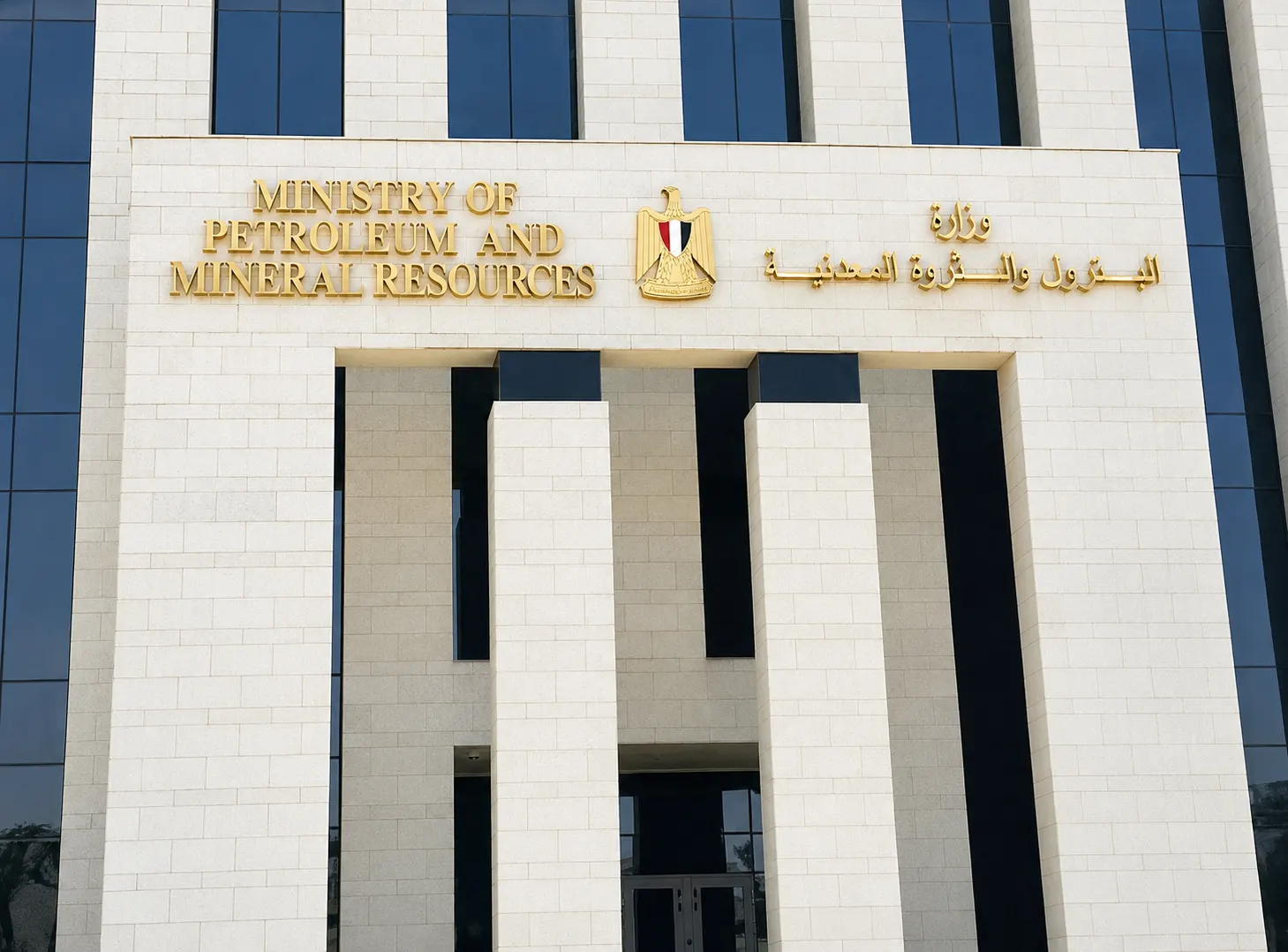
Egypt is widening its use of hydraulic fracturing and horizontal drilling, and the Western Desert gas well now being fractured, Al-Obayed H-18, aims to quadruple its output.
The push works on wells and fields Egypt already has: lifting existing wells, reviving those whose output has slipped and reaching reservoirs that conventional methods could not tap economically. The largest figure in the release is for oil, where a preliminary industry study sees 50,000 to 100,000 barrels a day of possible additions. In The Edge’s reading, faster cost recovery under the new contracts will decide how many partners move beyond pilot projects.
Petroleum and Mineral Resources Minister Karim Badawi said on 4 November that the two technologies are among the main technology tracks of the sector’s five-year plan, as a way to raise oil and gas output and address the natural decline in output from producing fields. He spoke while inspecting fracturing work at H-18.
A Western Desert well aims for 12 million cubic feet a day
H-18 sits in the Al-Obayed field, operated by Badr Eldin Petroleum Company. Multi-stage fracturing is meant to lift its gas output to an estimated 12 million cubic feet a day from an estimated 3 million now, the Ministry of Petroleum and Mineral Resources said.
That is a planned gain of 9 million cubic feet a day. The well had run into technical problems that cut its output, and conventional methods were not enough to restore the target rates, according to the ministry.
The ministry first described the operation on 29 October, calling it the largest multi-stage fracturing job the Egyptian petroleum sector has seen. Badr Eldin, a joint venture of the Egyptian General Petroleum Corporation (EGPC) with Cheiron and Capricorn, spent several months on the technical study and work plan.
H-18 is a horizontal gas well drilled in 2019. Its total depth is an estimated 5,630 metres and its horizontal section runs beyond 1,600 metres, which the ministry says suits multi-stage fracturing.
The job runs in three phases. The first, preparing the well with a drilling rig, was already complete on 29 October. The second fractures the rock in six successive stages without a rig, and the third completes the well with a workover rig.
Halliburton is carrying out the work with 18 high-pressure pumps totalling more than 40,000 horsepower. That is more than 2,200 horsepower a pump on average.
Halliburton’s representative said, in the ministry’s 29 October release, that execution would start in the coming days. By the ministry’s 4 November release, the minister was on site inspecting the fracturing.
Al-Obayed H-18 at a glance
| Measure | Value |
|---|---|
| Gas output now (million cubic feet a day) | 3 est. |
| Target (million cubic feet a day) | 12 est. |
| Total depth (metres) | 5,630 est. |
| Horizontal section (metres) | 1,600+ |
| Fracturing stages | 6 |
| High-pressure pumps | 18 |
| Pump power (horsepower) | 40,000+ |
| Year drilled | 2019 |
Output figures and total depth are the ministry’s estimates.
One fractured well would match a new Western Desert well
On 30 September the ministry reported 45 million cubic feet a day of new gas from four wells. Three were new and the fourth returned to production after repair.
The 9 million cubic feet a day H-18 is meant to add equals 20% of that four-well addition. Its 12 million target equals the estimated rate of SKAL-2, a new Khalda Petroleum well in the Western Desert reported by the ministry on 30 September.
Offshore, the scale is different. bp’s Fayoum 4 well, part of its Mediterranean drilling programme and set out earlier, was connected to the national gas grid at an estimated initial rate of 80 million cubic feet a day, the ministry said. The H-18 target is 15% of that rate.
Gas well rates named by the ministry (in million cubic feet a day)
| Well | Rate |
|---|---|
| Fayoum 4, bp | 80 |
| Amal-23 A ST, Gulf of Suez | 15 |
| SKAL-2, Western Desert | 12 |
| Al-Obayed H-18, target | 12 |
| MA-1X | 8 |
| Al-Obayed H-18, now | 3 |
All rates are the ministry’s estimates: Fayoum 4 as stated on 3 November, Amal-23 A ST, SKAL-2 and MA-1X on 30 September. A fourth well of 30 September, in the onshore Nile Delta, added an estimated 10 million cubic feet a day and is not shown.
Horizontal drilling reaches 16 wells, with six more under way or planned
General Petroleum Company has drilled 15 horizontal wells in its Sinai fields and is drilling four more, and at a number of sites they are producing more than conventional vertical wells, the ministry said.
Petrobel has drilled the horizontal well SIDRI-48, reaching reservoirs with complex rock properties. Urgent development plans include two horizontal wells at General Petroleum Company’s Nees field.
That makes 22 horizontal wells named in the release, 16 of them already drilled. Separately, the ministry has said 591 new wells were brought into production between July 2024 and June 2026, set out earlier.
NESR study puts the oil upside at 50,000 to 100,000 barrels a day
The headline estimate comes from NESR, which the ministry says has wide experience in 15 countries and a record in developing unconventional gas at Saudi Arabia’s Jafurah field. Its preliminary study says wider fracturing of unconventional oil resources in the Western Desert could add 50,000 to 100,000 barrels a day.
The ministry attaches a clear condition: the potential depends on completing the technical and economic assessments and identifying which opportunities can become producing projects.
For scale, the minister put crude output at more than 540,000 barrels a day on 17 June, set out earlier. Against that level, the low end of the study’s range is under 9.3% of crude output and the high end under 18.6%.
The fracturing programme in figures
| Item | Figure |
|---|---|
| Oil potential, low (b/d) | 50,000 |
| Oil potential, high (b/d) | 100,000 |
| Producing companies’ data reviewed | 38 |
| Abu Roash opportunities studied | 3 |
| Horizontal wells drilled | 16 |
| Horizontal wells being drilled | 4 |
| Horizontal wells planned | 2 |
Oil potential is the study’s preliminary estimate, conditional on technical and economic assessments. Well counts are from the 4 November release.
EGPC is running the programme under the ministry’s supervision, with the Egyptian Natural Gas Holding Company (EGAS), Ganoub El Wadi Petroleum Holding Company, producing companies and partners. A unified plan is in place, and technical data from 38 producing companies has been reviewed to rank wells and reservoirs by priority and economic feasibility.
SLB and Halliburton have been assigned technical studies of three opportunities in General Petroleum Company’s Abu Roash reservoirs. Technical studies and contracting procedures for the promising opportunities are being completed in parallel.
Halliburton’s chairman and chief executive met Badawi at ADIPEC 2026 in Abu Dhabi, the ministry reported on 3 November. They reviewed the company’s study on applying horizontal drilling and fracturing in Egypt and its timetable, and the fields to be put forward for pilot projects with EGPC, EGAS and Ganoub El Wadi.
New contracts aim to speed up cost recovery for partners
The ministry is reworking contract and financial terms to draw investment into the technology. The menu covers performance contracts, integrated services contracts and turnkey contracts, meant to raise spending efficiency, shorten execution and share risk more evenly between the parties.
Partners would get flexibility in paying for fracturing work and faster recovery of capital spending. The ministry is also studying how agreements are renewed and whether concession areas can be merged, to keep exploration and production going.
The talks with Halliburton also covered incentive contract models and digital tools to cut production costs and reduce the number of wells needed. On 4 November the minister said both technologies have succeeded in the United States, Saudi Arabia and other countries, and inside Egypt’s own sector, particularly in the Western Desert.
The next phase widens the work to onshore and offshore areas, drawing on the results of earlier operations and on seismic data.
What to watch:
Third quarter of fiscal 2026/27: the first SLB and Halliburton study results on the three Abu Roash opportunities are expected to arrive in stages, the ministry said.
Figures and statements are from the Ministry of Petroleum and Mineral Resources releases of 4 November 2026 on hydraulic fracturing and horizontal drilling, 29 October 2026 on the Al-Obayed H-18 well, 3 November 2026 on the minister’s meetings with bp and Halliburton, 30 September 2026 on new gas wells and 17 June 2026 on crude output; percentages, ratios, sums and counts not attributed to a source are The Edge’s calculations.
Sources: Ministry of Petroleum and Mineral Resources, The Edge.