OPEC Sees No Peak in Oil Demand, Lifts 2050 Forecast to 124.1 Million Barrels a Day in New World Oil Outlook
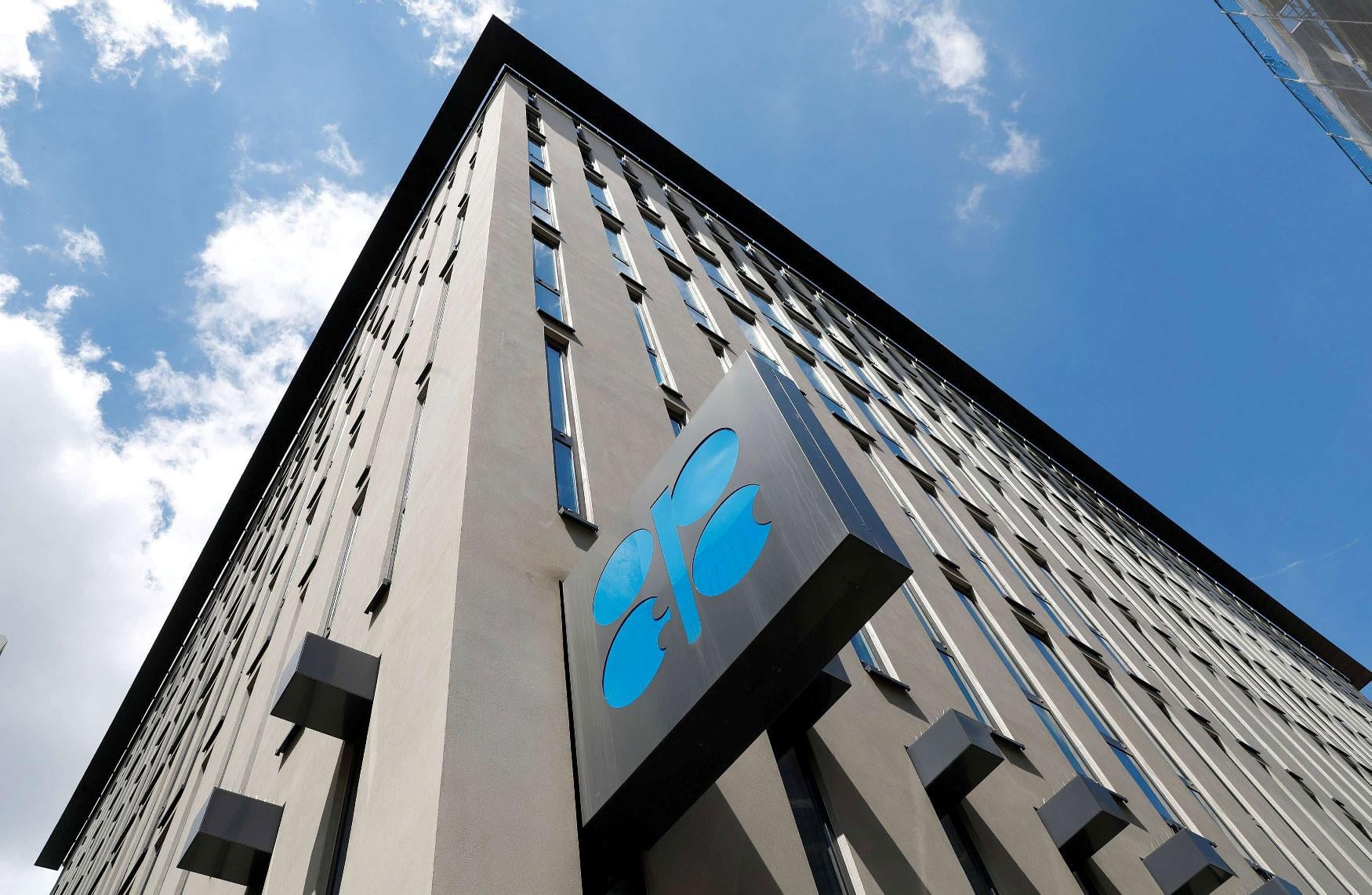
OPEC reaffirmed its long-held view that there is no peak in oil demand on the horizon, raising its long-term forecast as it launched the 20th edition of its flagship World Oil Outlook on 18 June 2026. The report projects that global oil demand will keep growing for decades, reaching 124.1 million barrels per day (mb/d) by 2050, and calls for US$17.7 trillion of investment across the oil industry to meet it.
Published as the 20th edition of the World Oil Outlook and subtitled “World Oil Outlook 2050,” the report was launched from OPEC’s Secretariat in Vienna via videoconference. In the foreword, OPEC Secretary-General Haitham Al Ghais wrote that oil demand would reach 124 mb/d by 2050, “with no peak in oil demand on the horizon.” The Outlook frames the energy challenge around security, affordability and emissions reduction, while stressing the diverse energy needs of countries worldwide.
Demand Growth to 2050
OPEC expects global oil demand to rise to 113.3 mb/d by 2030 and 124.1 mb/d by 2050, an increase of 19 mb/d over the outlook period. That 2050 figure is a modest upward revision from the 2025 edition, reflecting OPEC’s confidence that economic and population growth will keep underpinning consumption.
The growth is overwhelmingly a developing-world story. Demand in non-OECD countries is set to increase by 7.4 mb/d between 2025 and 2030 and by 26.9 mb/d between 2025 and 2050. By contrast, OECD demand rises only marginally — around 0.7 mb/d to 2030 — before declining by almost 8 mb/d by 2050.
By region, the primary sources of long-term growth are India, Other Asia, the Middle East, Africa and Latin America, which together add 25.2 mb/d between 2025 and 2050. India alone accounts for 8.1 mb/d of that increase, with Other Asia adding 5.3 mb/d, the Middle East 4.7 mb/d, Africa 4.3 mb/d, Latin America 2.8 mb/d and China 1.1 mb/d.
By sector, the gains are led by road transportation (+5.7 mb/d), petrochemicals (+4.6 mb/d) and aviation (+4.2 mb/d) out to 2050, with electricity generation the only sector showing a long-term decline, down 0.5 mb/d.
A Bigger Energy Pie
The oil outlook sits within a broader projection of rising global energy needs. OPEC expects total primary energy demand to climb from around 312 million barrels of oil equivalent per day (mboe/d) in 2025 to nearly 383 mboe/d in 2050 — an increase of about 23%, or 0.8% a year on average. As with oil, that growth comes almost entirely from developing economies, while energy demand in developed countries rises only marginally or declines.
Notably, OPEC does not present this as a fossil-versus-renewables contest. Demand for all primary fuels except coal is set to increase to 2050, with renewables — biomass, solar, wind, hydro and others — recording the strongest combined growth of 51.3 mboe/d. The Outlook’s argument is that the world will need more of almost every energy source to power economic development, rather than oil being displaced.
US$17.7 Trillion of Investment Required
A central theme of the report is the scale of investment needed to keep supply flowing. OPEC estimates cumulative oil-sector investment needs at US$17.7 trillion, in 2026 dollars, over 2026–2050. Upstream accounts for US$14.5 trillion; OPEC says the upstream requirement is slightly higher on an annual basis than in the 2025 Outlook because of higher projected long-term supply and a shift toward higher-cost resources. Downstream needs are put at US$1.9 trillion and midstream at US$1.3 trillion.
The investment message is also a warning: OPEC has repeatedly cautioned that underinvestment — driven by narratives of an imminent demand peak or stranded assets — risks future supply shortfalls and price volatility.
A Rising Role for OPEC+ Producers
The Outlook also points to a growing market share for the producers in the Declaration of Cooperation (the OPEC+ group). Their liquids supply is projected to rise from 50.6 mb/d in 2025 to 64.5 mb/d by 2050, lifting their share of global supply from 48% to 52%. Non-DoC supply is seen reaching 59.6 mb/d by 2050, up 5.5 mb/d from 2025, with producers such as Canada and Argentina among the few still growing output in the long term.
Why It Matters
The Outlook carries strategic weight for oil producers and the wider region. OPEC’s rejection of a near-term demand peak, and its emphasis on the need for sustained upstream investment, supports the case for continued spending on production capacity across the Middle East and other producing regions — even as many of those economies simultaneously pursue diversification.
The projection that demand growth will be concentrated in Asia, the Middle East and Africa underscores the eastward and southward shift in oil markets that has been reshaping global trade flows and partnerships for years. For producers whose public finances depend on hydrocarbon revenue — across the broader MENA region and beyond — OPEC’s long-horizon view offers a counterpoint to the more transition-focused scenarios of agencies such as the IEA, whose Stated Policies Scenario sees oil demand plateauing around the early 2030s.
Outlook
The World Oil Outlook is a long-term scenario, not a market forecast for any single year, and OPEC’s relatively bullish demand path stands in contrast to more transition-focused outlooks from other agencies. That divergence is itself the story: where some see oil demand plateauing within a decade, OPEC sees decades of growth and a multitrillion-dollar investment bill to match. For oil producers across the Middle East and beyond, the report reinforces a central planning assumption — that oil will remain a pillar of the global energy system, and of their economies, well into the 2050s.
Sources: OPEC (World Oil Outlook 2026).