China Leaves Its Loan Prime Rate at 3.0 Percent for a 16th Consecutive Fixing
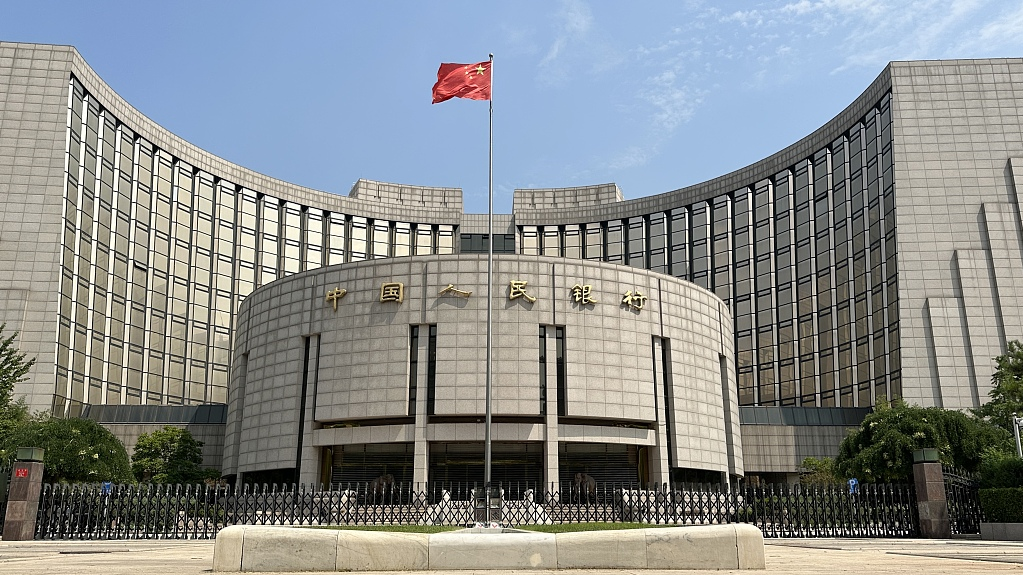
China left its benchmark lending rate unchanged on Sunday, holding the one year loan prime rate at 3.0 percent and the rate over five years at 3.5 percent, the sixteenth consecutive monthly fixing without a move.
The announcement, authorised by the People’s Bank of China and issued through the National Interbank Funding Centre, runs to a single sentence and gives no reasoning. It states the two rates and says they are valid until the next fixing.
The rate has not moved since May 2025
The loan prime rate was last changed on 20 May 2025, when it was cut to 3.0 and 3.5 percent from 3.1 and 3.6 percent. Every fixing since has left it there: sixteen in a row, on our count from the central bank’s own announcement archive.
| Fixing | 1-year LPR | Over 5-year LPR |
|---|---|---|
| 20 September 2026 | 3.0% | 3.5% |
| 20 May 2025, the last change | 3.0% | 3.5% |
| 21 April 2025 | 3.1% | 3.6% |
Source: People’s Bank of China, announcements authorising publication of the loan prime rate. Fixings fall on the twentieth of the month or the next working day.
The gap between the two tenors has been 50 basis points throughout that run, on our calculation. That spread matters in China because the rate over five years is the reference for mortgages while the one year rate prices most corporate lending. Holding both steady leaves the benchmark relationship between business credit and longer term lending where it has stood since May 2025, although what borrowers actually pay can still move through the spreads and risk pricing banks apply on top.
The freeze sits against an economy pulling in two directions
The rate has been held through a period in which China’s activity data has not moved as one. On the latest releases from the National Bureau of Statistics and the central bank, reported by The Edge at the time, property investment fell 19.9 percent while factory output and exports accelerated, and Chinese households cut their borrowing by 1.03 trillion yuan even as companies and institutions added 11.26 trillion yuan to theirs.
A benchmark lending rate is the price of new credit, not a measure of how much of it is taken. Contracting household borrowing alongside an unchanged loan prime rate does not by itself prove that the cost of credit is irrelevant to households. It does show that holding the benchmark at its existing level has not been enough to revive household borrowing, which points to something beyond the headline lending rate.
Why it matters: Sixteen fixings without a move shows that the central bank has not used its lending benchmark as a broad easing channel since May 2025. That matters because the weakness in household credit and property investment has persisted while the benchmark has sat at the lowest level in its series. The loan prime rate sets a reference price for credit; it does not create demand for it. For Gulf producers the relevance is indirect but real: China is the world’s largest crude importer, and a lending benchmark that has not shifted in sixteen months is evidence that Beijing is not attempting to restore domestic demand through the price of loans. It is one signal among several and should not be read as a forecast of Chinese crude purchases, but it does narrow the list of channels through which a recovery in that demand would arrive.
Outlook: The next fixing falls in October. The announcement published on Sunday contained nothing but the two rates, so the only forward signal it carries is the numbers themselves. The other rate under the central bank’s own hand moved no further: in its open market operation the same morning it conducted 32 billion yuan of seven day reverse repurchase agreements at a fixed rate of 1.40 percent. With the lending benchmark frozen for sixteen fixings and the seven day rate held alongside it, the stimulus China is running is being delivered somewhere other than the price of money, and it is there that a change would have to show up first.
Sources: People’s Bank of China, National Bureau of Statistics of China, The Edge.