Central Bank of Jordan Raises Policy Rates 25 Basis Points, Main Rate to 6.00 Percent
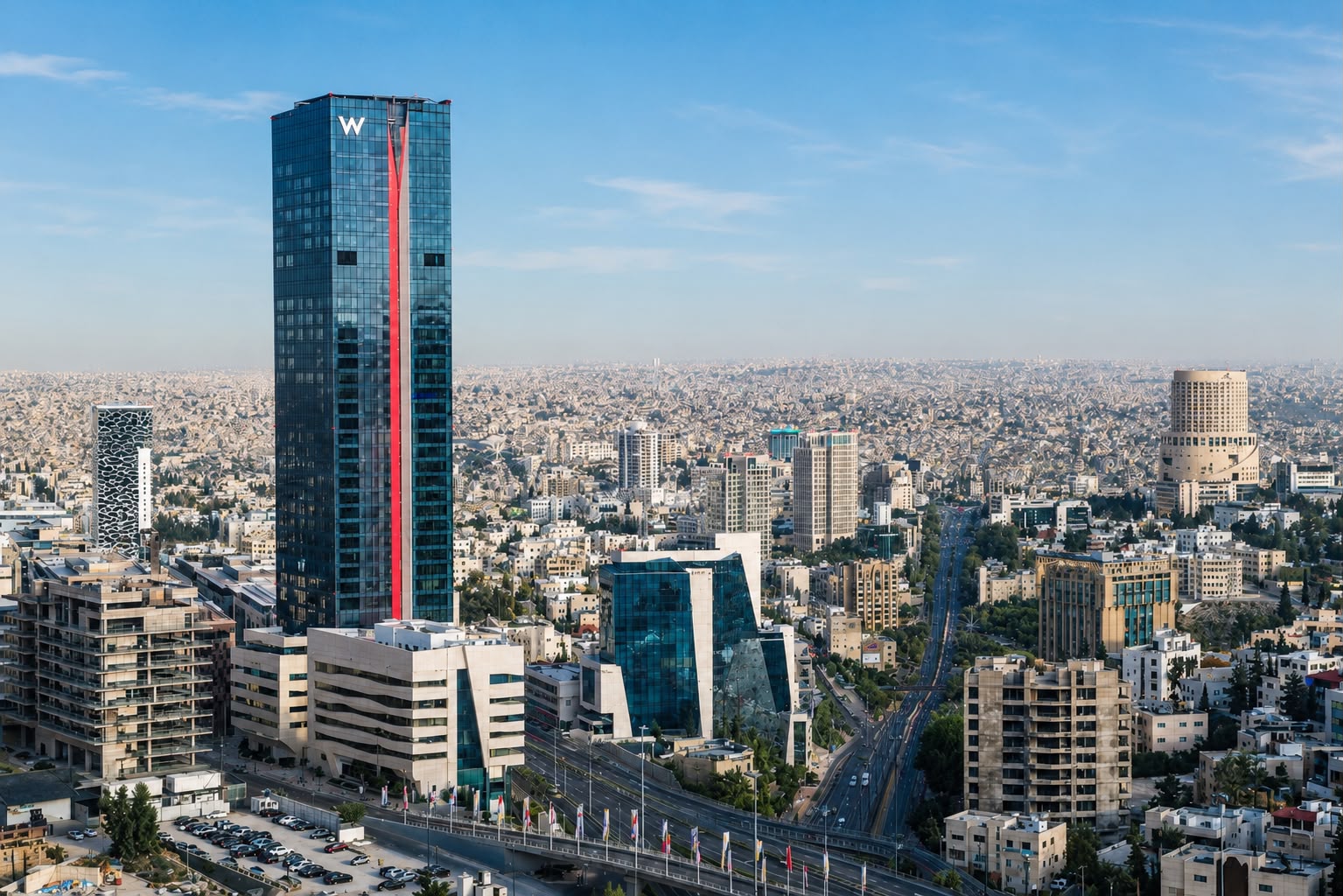
The Central Bank of Jordan has raised interest rates on all monetary policy instruments by 25 basis points, with effect from Monday 21 September 2026. The Open Market Operations Committee took the decision at its sixth meeting of 2026, and licensed banks were notified in circular number 5/2026, signed by the Governor, Dr Adel Al-Sharkas, and dated 20 September 2026.
Central Bank of Jordan policy rates
| Instrument | From 21 September 2026 | From 14 December 2025 |
|---|---|---|
| Main policy rate | 6.00% | 5.75% |
| Rediscount rate | 7.00% | 6.75% |
| Overnight repurchase agreements | 6.75% | 6.50% |
| Overnight deposit window | 5.75% | 5.50% |
| One-week repurchase agreements | 6.00% | 5.75% |
| One-month repurchase agreements | 6.00% | 5.75% |
| One-week certificates of deposit | 6.00% | 5.75% |
The bank left the rates it charges under its programme to finance and support economic sectors unchanged, at 1.00 percent for projects inside the capital and 0.50 percent for projects in the remaining governorates.
The committee’s reasoning
The committee said the decision was consistent with the bank’s principal objective of preserving monetary stability and strengthening the attractiveness of the Jordanian dinar and the competitiveness of assets denominated in it, by aligning domestic interest rates with prevailing trends in regional and international financial markets. It said it acted after reviewing the main economic, monetary and financial developments locally, regionally and internationally, the policy direction of central banks, and the measures being taken to address mounting inflationary pressures.
On the domestic side, the committee reported inflation of 2.20 percent in the first eight months of 2026, against 1.86 percent in the same period of 2025. It pointed to the resilience of monetary and banking conditions in the kingdom and the continued recovery of economic indicators, with tourism income growing 2.9 percent in the first eight months of the year to about 5.6 billion dollars.
The move follows the Federal Reserve’s own quarter-point increase to a target range of 3.75 to 4.00 percent, recorded in the Board of Governors’ account of Federal Open Market Committee decisions on open market operations as effective 17 September 2026. The Jordanian dinar has been pegged to the US dollar since 1995.
Why it matters: The decision reverses direction. The rate schedule was last changed in December 2025, when the main policy rate was reduced to 5.75 percent from the 6.00 percent shown in the bank’s schedule of 2 November 2025. This is the first increase since then, and it restores the main rate to the 6.00 percent level that applied from 2 November 2025 until the December reduction.
Outlook: The exclusion of the sector support programme from the increase is the feature to watch. By holding those rates at 1.00 percent inside the capital and 0.50 percent elsewhere while lifting the policy rate, the bank has widened the concession implicit in the programme and insulated the targeted sectors from tightening applied to the rest of the market. The committee gave no guidance on future decisions. Our own reading is that, with the dinar pegged to the dollar and the committee citing the alignment of domestic rates with international markets, the pace of any further moves will in practice follow Federal Reserve decisions for as long as domestic inflation stays close to 2 percent.
Sources: Central Bank of Jordan, press release on the Open Market Operations Committee decision, 20 September 2026; Central Bank of Jordan, circular to licensed banks number 5/2026, 20 September 2026; Central Bank of Jordan, interest rates on monetary policy instruments and open market operations, 21 September 2026; Board of Governors of the Federal Reserve System, record of open market operations.