Saudi Arabia Keeps the IMFC Chair for a 4th Year as Members Back Secure Energy Flows
Saudi Finance Minister Mohammed Al-Jadaan will chair the International Monetary and Financial Committee into a fourth year, and the committee’s members, meeting in Bangkok on 17 October, agreed text that stresses secure and resilient energy flows and the principle of freedom of navigation as essential to global economic stability. In the same text, members said they appreciated Saudi Arabia’s leadership of the committee and welcomed the one-year extension of his term.
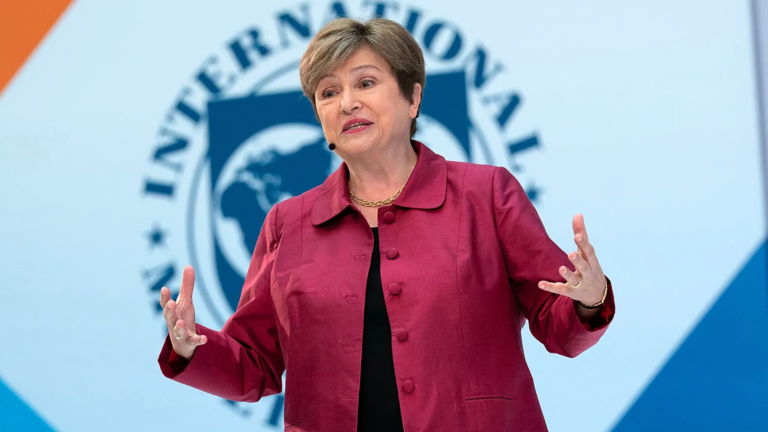
At the committee’s press briefing, Managing Director Kristalina Georgieva singled out the Gulf Cooperation Council economies, saying years of firm reform, together with the revenues they have had over the years, now let them cushion the shock that hit them. Al-Jadaan said most GCC countries came to the shocks prepared, with structural reforms done and buffers built, and that without investments made by countries such as Saudi Arabia the energy shock would have been a lot worse for the global economy.
A Fourth Year for Saudi Arabia in the Chair
Al-Jadaan was selected for a three-year term that ends on 3 January 2027. The committee announced on 13 October that he had accepted a one-year extension, which carries his chairmanship into a fourth year, to January 2028, on our calculation. The committee has 25 members, mirroring the composition of the Executive Board, and the announcement said the extension would help ensure continuity and maintain momentum on the committee’s key priorities, including significant ongoing reforms. Saudi Central Bank Governor Ayman Alsayari attended in Bangkok as his alternate.
On quotas, members said they look forward to finalising domestic approvals for their consent to the quota increase under the 16th General Review of Quotas with no further delay, and that the Diriyah Guiding Principles will guide talks on quota and governance reform, including the 17th review. The Board of Governors approved the 50 percent increase in December 2023, an addition of SDR 238.6 billion that would bring total quotas to SDR 715.7 billion. At the 16 October SDR rate that total is equivalent to 970.8 billion dollars and the addition to 323.7 billion dollars, on our calculation.
Gulf and Egypt Quotas and Voting Shares
| Member | Quota (SDR m) | Share of quotas | Share of votes |
|---|---|---|---|
| Saudi Arabia | 9,992.6 | 2.10% | 2.01% |
| UAE | 2,311.2 | 0.49% | 0.49% |
| Egypt | 2,037.1 | 0.43% | 0.43% |
| Kuwait | 1,933.5 | 0.41% | 0.41% |
| Qatar | 735.1 | 0.15% | 0.17% |
| Oman | 544.4 | 0.11% | 0.14% |
| Bahrain | 395.0 | 0.08% | 0.11% |
| Six GCC members | 15,911.8 | 3.34% | 3.33% |
Quotas and voting shares as published by the IMF, updated 17 October 2026; GCC totals are our calculation. Dollar equivalents in the text are our calculation at SDR 1 = 1.356460 dollars on 16 October.
Saudi Arabia’s quota alone is equivalent to 13.6 billion dollars and makes up 62.8 percent of the six GCC members’ combined quotas, on our calculation. The 16th review increase takes effect only once members holding at least 85 percent of total quotas on 7 November 2023 consent in writing, and once participants representing at least 90 percent of credit arrangements under the New Arrangements to Borrow agree to scale those arrangements back. The consent period now runs to 15 November 2026. When the increase takes effect, the New Arrangements to Borrow fall by SDR 61.3 billion from the SDR 364 billion now committed, so quotas and those credit lines together rise by a net SDR 177.3 billion, equivalent to 240.5 billion dollars, on our calculation.
Agreed Text Backs Secure Energy Flows and Credible Fiscal Frameworks
The committee’s reading was that the world economy came through the latest run of shocks “better than expected, but buffers have been eroded”, with risks still tilted to the downside. Members warned that escalating conflicts and trade tensions could further disrupt critical trade routes and lift commodity prices, refined energy products included, and that rising sovereign bond yields in systemic economies could amplify vulnerabilities where public debt and refinancing needs are high.
On policy, members called for fiscal consolidation anchored in credible medium-term frameworks, rebuilding buffers while protecting the most vulnerable and investment that drives productivity. They said central bank independence remains essential to keep inflation expectations anchored, welcomed the Bangkok Blueprint on digital finance safeguards, cyber resilience and digital fraud, and reaffirmed their April 2021 exchange rate commitments. The October World Economic Outlook, the backdrop to the talks, projects global growth of 3.1 percent in 2026 and 3.4 percent in 2027, with inflation at 4.7 percent this year.
Georgieva also pointed to low-income countries, where, she said, debt payments have climbed from 8 to 14 percent of revenue in recent years, even as their debt ratios edge down. That is a 75 percent rise in the share of revenue spent on debt, on our calculation.
Gulf Buffers Win Credit in Bangkok
Saudi general government gross debt is projected at 35.4 percent of GDP in 2026 and the UAE’s at 32.8 percent, against 94.6 percent for the world and 107.8 percent for advanced economies. On our calculation the world ratio is 2.7 times Saudi Arabia’s, and both Gulf ratios sit below 40 percent of the global figure. Saudi consumer price inflation is projected at 1.9 percent this year, 2.8 points below the global rate.
Gulf Debt Ratios Stay Far Below the World Average
| Economy | 2025 | 2026 | 2027 |
|---|---|---|---|
| UAE | 33.9% | 32.8% | 30.8% |
| Saudi Arabia | 31.8% | 35.4% | 37.3% |
| Egypt | 86.8% | 84.0% | 82.9% |
| World | 94.0% | 94.6% | 95.8% |
| Advanced economies | 108.2% | 107.8% | 108.5% |
General government gross debt as a share of GDP, World Economic Outlook October 2026; 2026 and 2027 are projections.
The Saudi economy is projected to rebound 7.9 percent in 2027 after contracting 3.3 percent this year, both in real terms, while its nominal GDP is projected at 1,343.3 billion dollars in 2026, 5.5 percent above 2025, on our calculation.
Egypt’s Programme Heads for Completion This Year
Georgieva said Egypt’s programme is moving forward and is to be completed by the end of the year, alongside what she called a very good, successful programme with Jordan, and said Iraq’s authorities have requested one. The Executive Board completed the seventh review of Egypt’s 48-month Extended Fund Facility and the second review under its Resilience and Sustainability Facility on 30 July.
That review found growth of 5.2 percent over the first nine months of fiscal 2025/26 and gross financing needs down by 5 percent of GDP over the fiscal year. The October projections put Egypt’s growth at 5.1 percent in 2026, up from 4.4 percent, with inflation 7.1 points lower at 13.3 percent and public debt edging down to 82.9 percent of GDP by 2027, 8.0 points below 2024, on our calculation.
Why it matters: For Saudi Arabia, a fourth year in the chair keeps a Gulf finance minister steering the committee while the 16th quota increase moves through national approvals and the Diriyah Guiding Principles frame the 17th review. The same agreed text that welcomed Saudi Arabia’s leadership treats secure and resilient energy flows and freedom of navigation as essential to global economic stability, and the October projections put Saudi and UAE debt ratios below 40 percent of the world’s, on our calculation.
Outlook: The committee next expects to meet in April 2027 in Washington, with Al-Jadaan in the chair beyond 3 January 2027. The markers to watch are national consents to the 16th review increase before the 15 November deadline, completion of Egypt’s programme by year-end, and the 7.9 percent Saudi rebound projected for 2027.
Sources: IMF, The Edge.